Altinkaya Electronic Enclosures
Self-Clinching Fasteners
Technical Handbook
A simplified, web-compatible technical guide prepared to create strong threads in thin sheet metal, improve installation reliability, and help select the right fastener type.
4Basic product types
M3–M8Thread range
PressInstallation method
Chapter 1
A Strong and Reliable Fastening Solution for Thin Sheet Metal
Self-clinching fasteners are a practical way to obtain strong threads and secure mounting points in thin metal sheets.
Self-clinching fasteners are designed to create durable, repeatable, and professional fastening points in thin sheet metal. When pressed into the part with a controlled squeezing force, the fastener locks mechanically into the sheet, providing high mechanical strength and improving installation reliability.
In electronic enclosures, control panels, metal cabinets, industrial equipment, and many other sheet metal applications, they provide an ideal solution for threaded attachment, mounting, and spaced mounting points. Altinkaya's product range includes self-clinching nuts, studs, and standoff solutions that offer design flexibility, rapid installation, and long service life.
Chapter 2
How, Why and Where to Use Self-Clinching Fasteners
Self-clinching fasteners are permanent fastening elements that are pressed into thin sheet metal and become mechanically locked within the material. When placed in a properly sized hole, the fastener is seated into the sheet with a controlled squeezing force, creating a strong mounting point. This method is an effective solution for obtaining strong threads and reliable connections in thin sheet metal parts.
These products are widely used in electronic enclosures, control panels, metal cabinets, and various industrial sheet metal applications. They offer significant advantages in designs that require high strength, rapid assembly, and a clean part structure. They also simplify assembly in applications where rear access is limited.
Advantages of Self-Clinching Fasteners
- Provide strong, reliable threads in thin sheet metal.
- Reduce the need for welding, secondary fastening, or complex operations.
- Install into a plain round hole.
- Deliver a low-profile, clean installation appearance.
- Provide high torque-out and pushout resistance.
- Suit high-volume production processes.
- Improve assembly efficiency in electronic and industrial applications.
- Offer design flexibility through multiple fastener types.
- Provide a long-lasting and professional fastening solution.
Chapter 3
Reliability in Service and Application Conditions
Self-clinching fasteners are designed to create reliable, repeatable, and durable mounting points in sheet metal parts. During installation, the fastener is pressed into a pre-punched hole with a controlled squeezing force and becomes mechanically locked in the sheet. This creates strong threaded attachment points for panels, housings, and internal mounting parts.
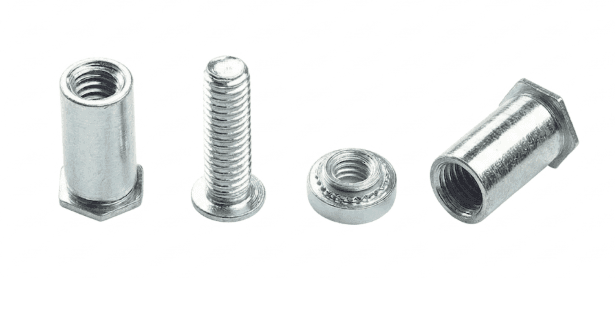
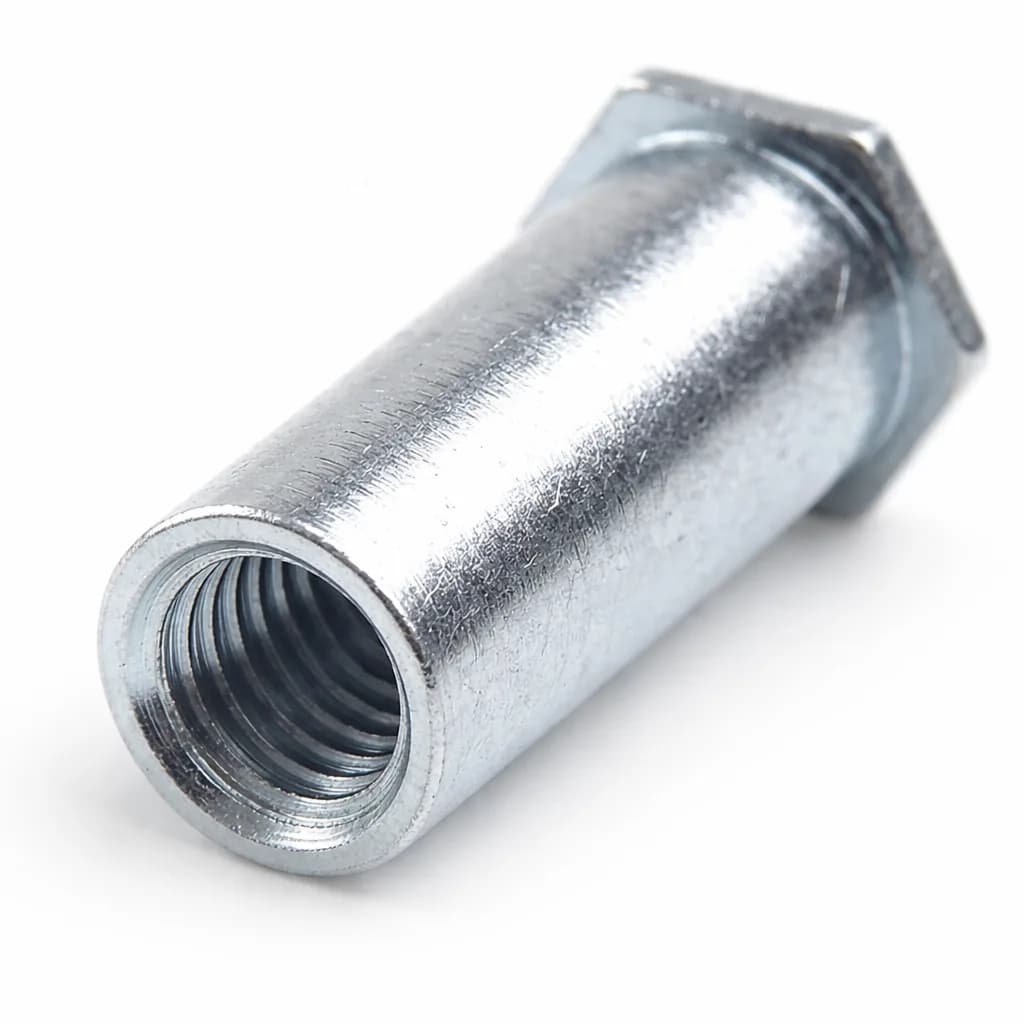
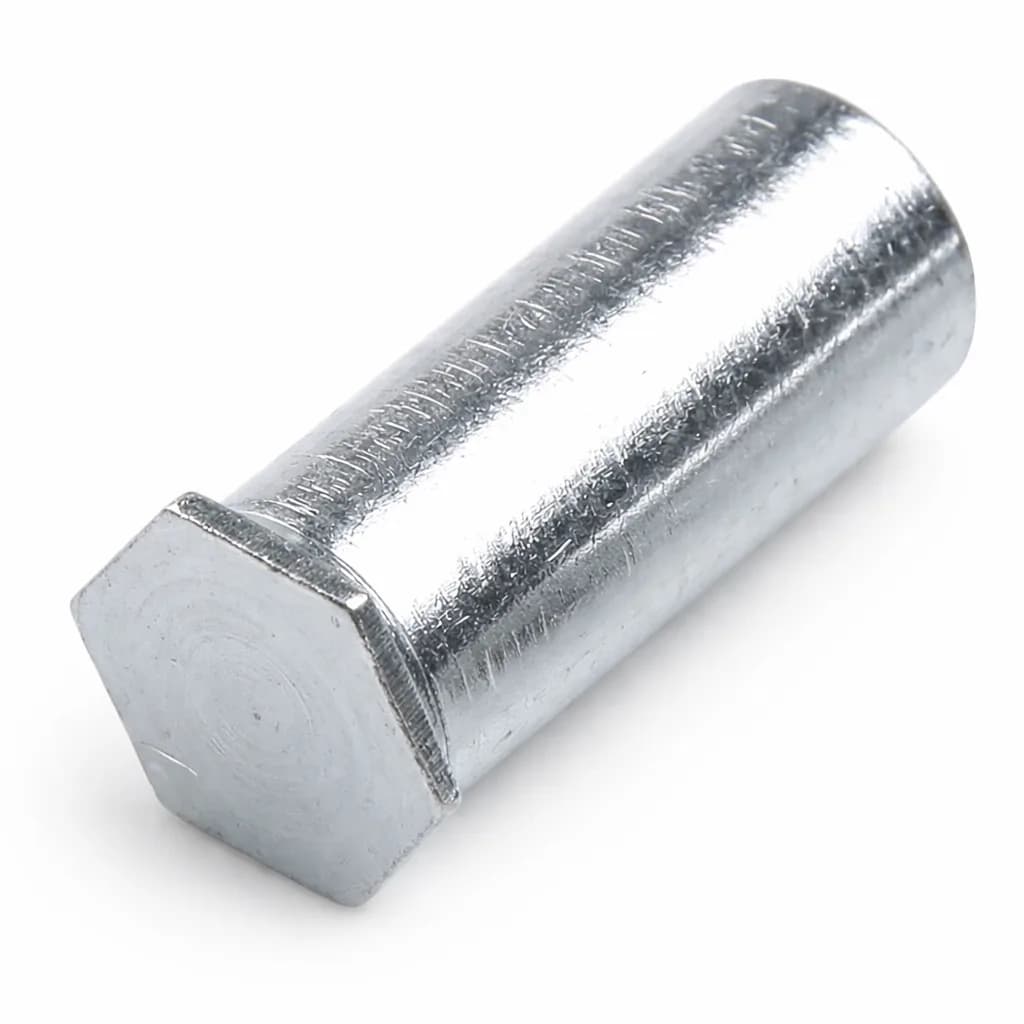
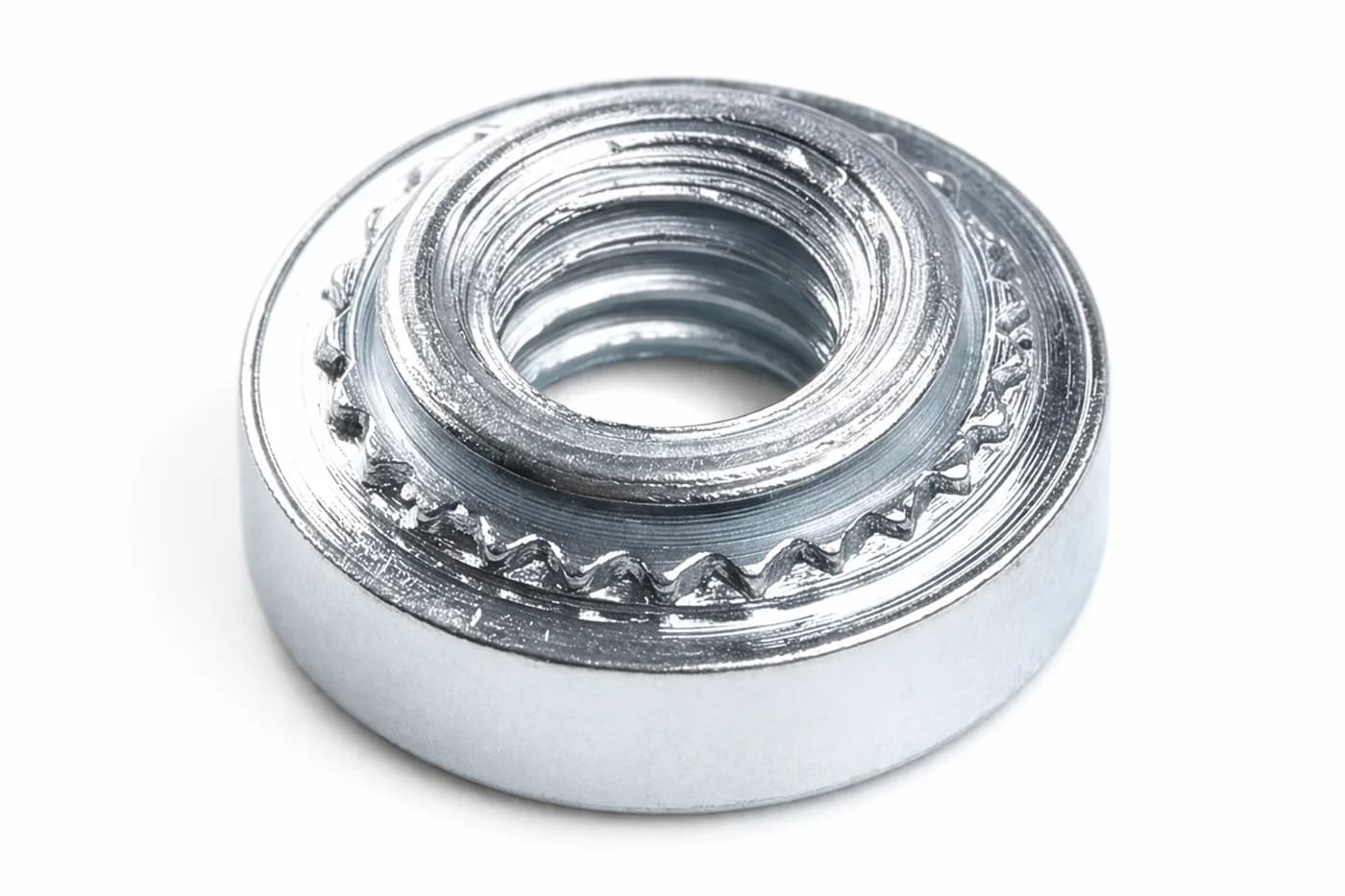
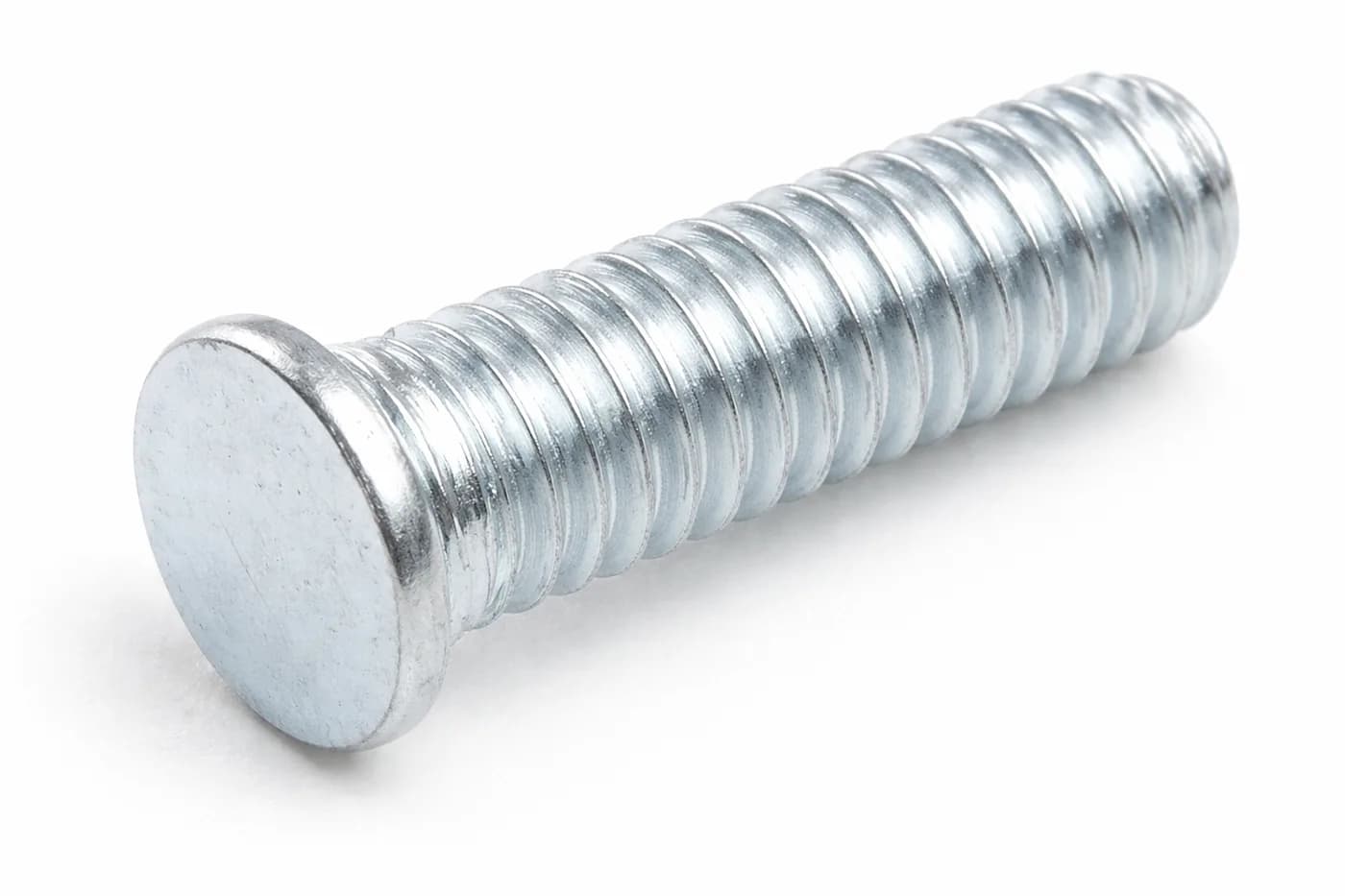
Altinkaya's product range includes through-threaded standoffs (SO), blind standoffs (BSO), self-clinching studs (FH), and self-clinching nuts (S). SO and BSO series are offered in M3–M5; FH and S series cover thread sizes from M3 to M8. The products are listed in steel.
Product Summary Table
| Model | Image | Description | Thread Size | Length Range | Material |
|---|---|---|---|---|---|
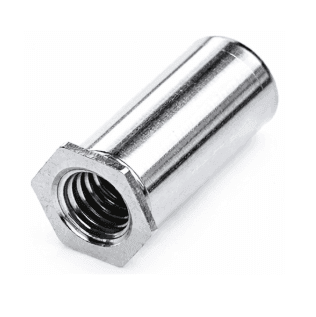
| SO | 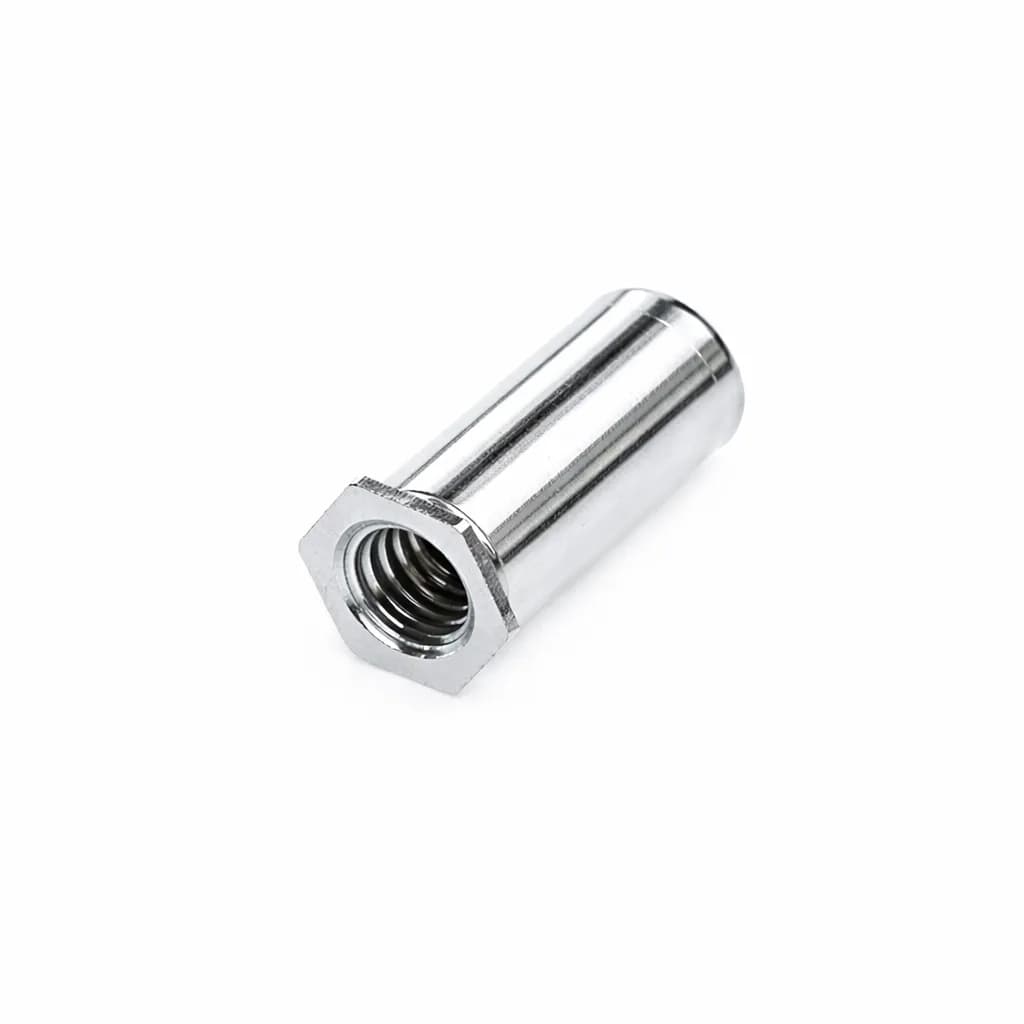 | Through-threaded standoff | M3–M5 | 3–25 mm | Steel |
| BSO | 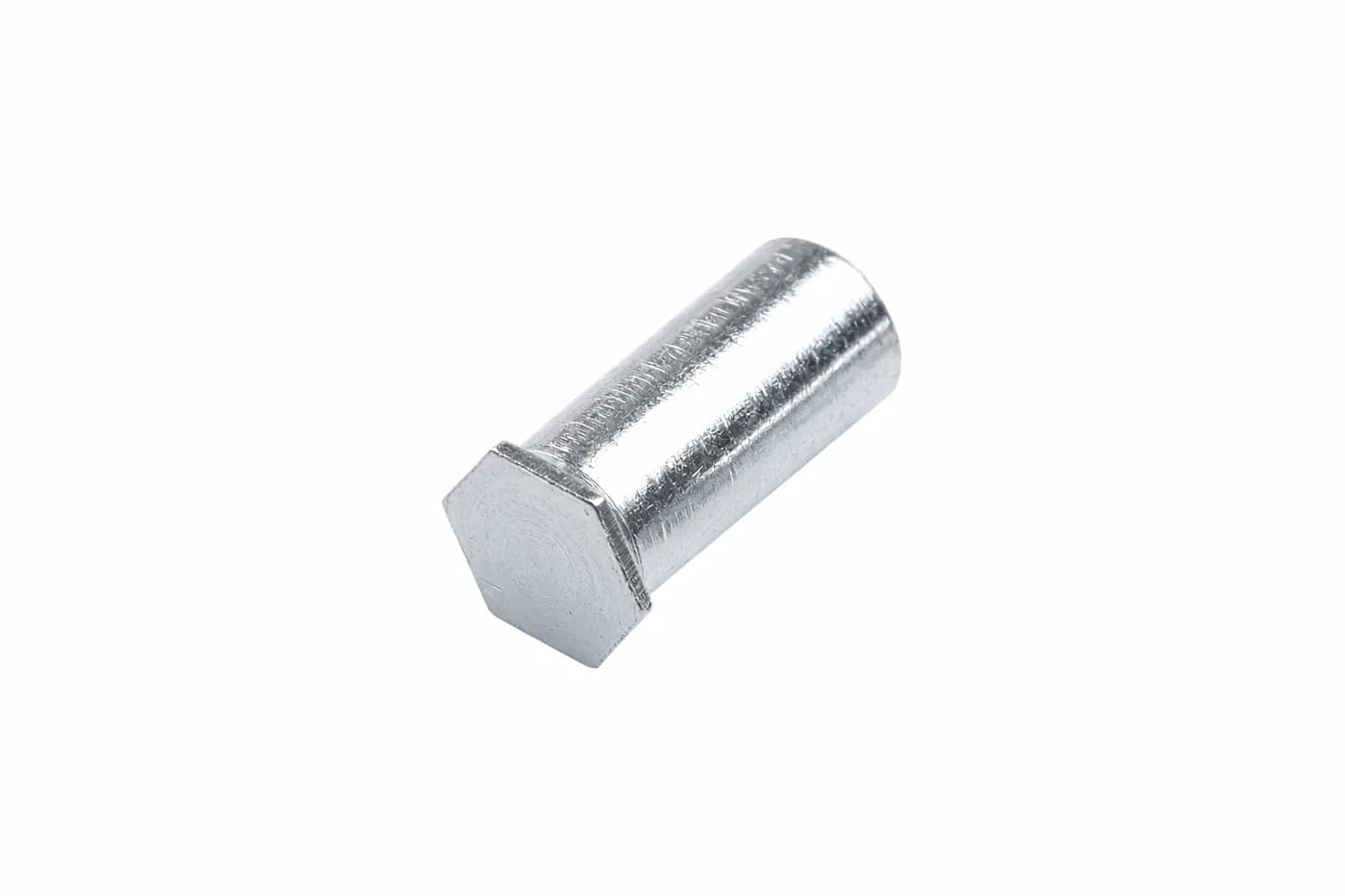 | Blind standoff | M3–M5 | 6–26 mm | Steel |
| FH | 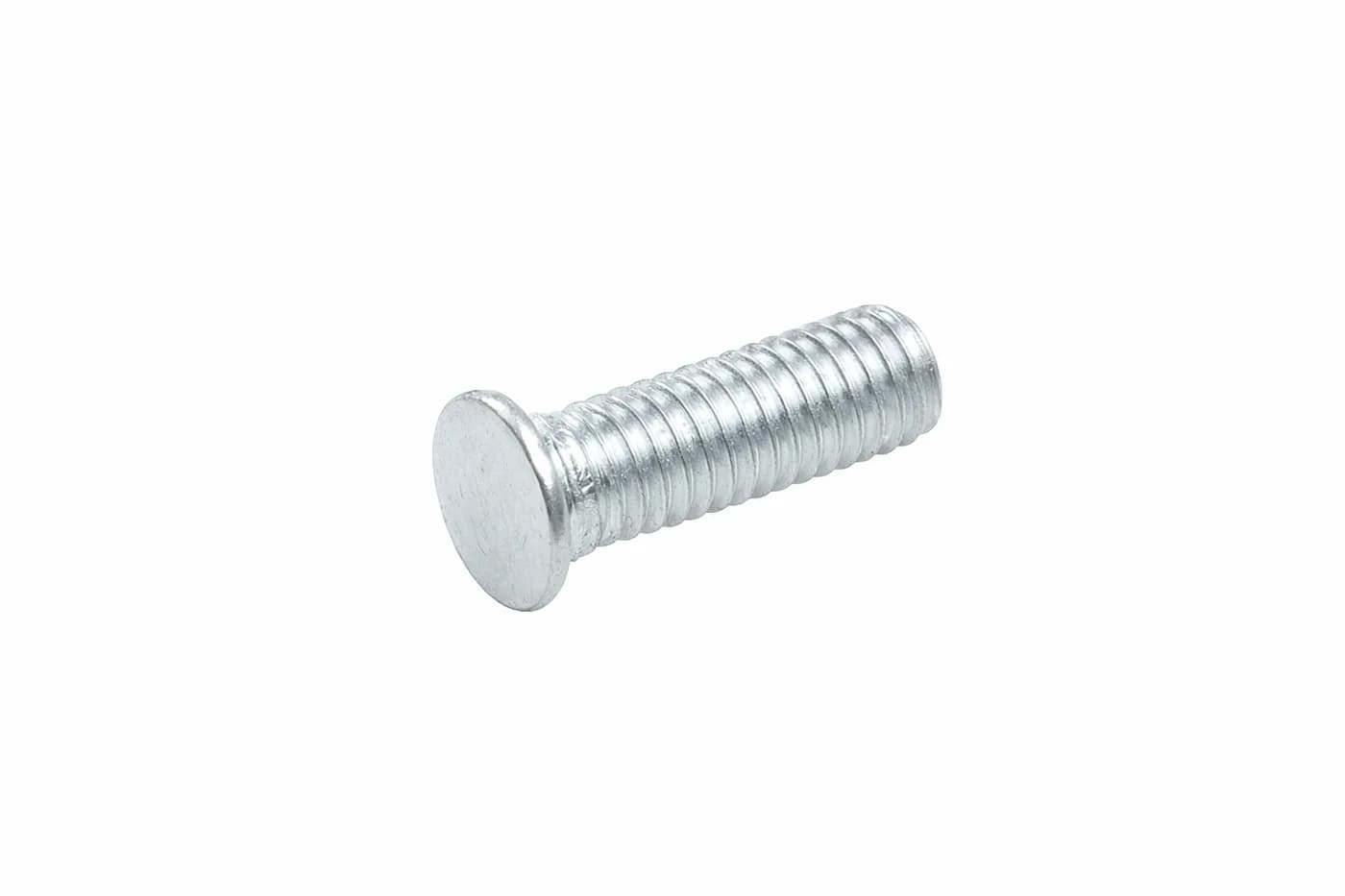 | Self-clinching stud | M3–M8 | 6–35 mm | Steel |
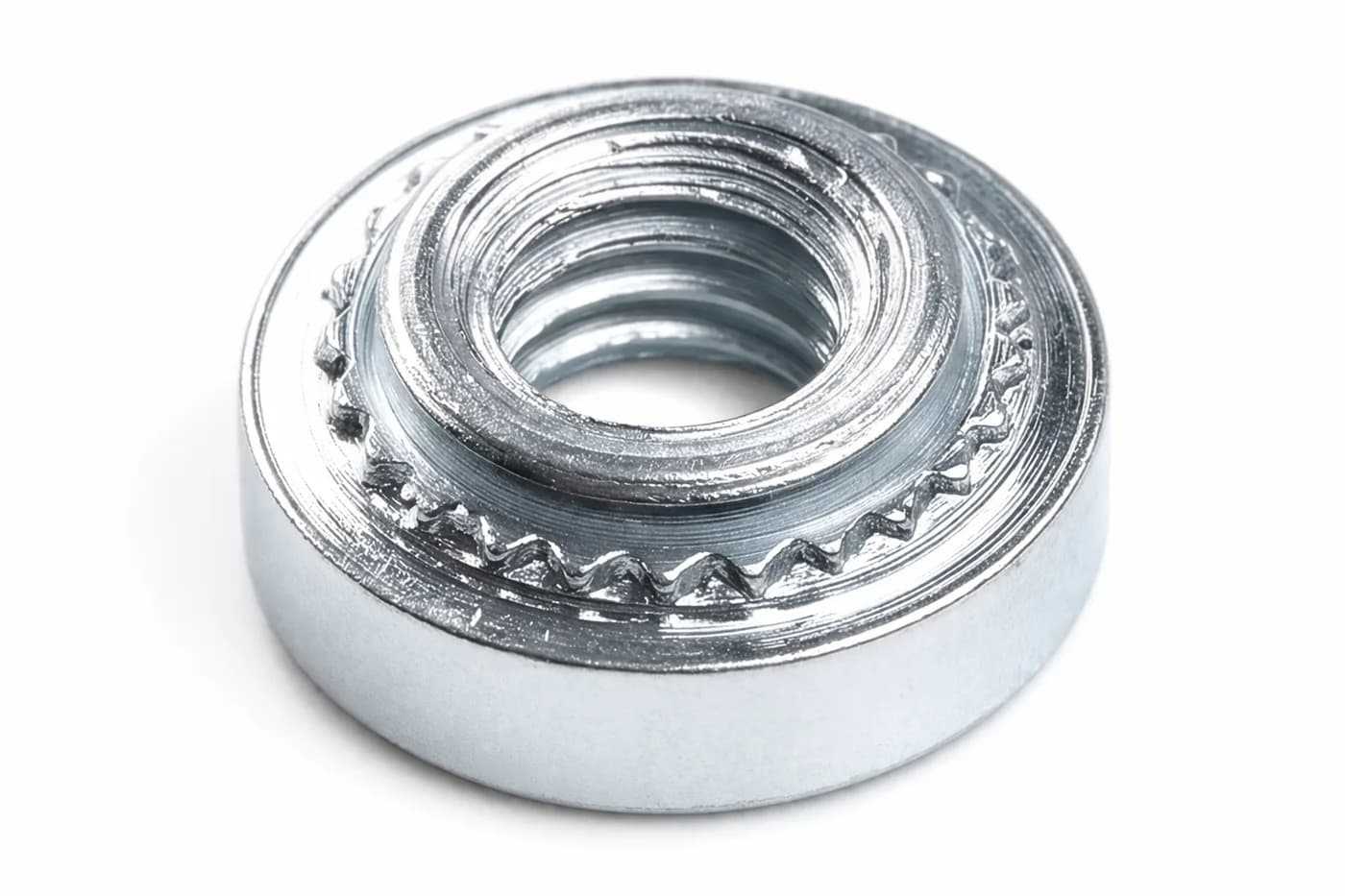
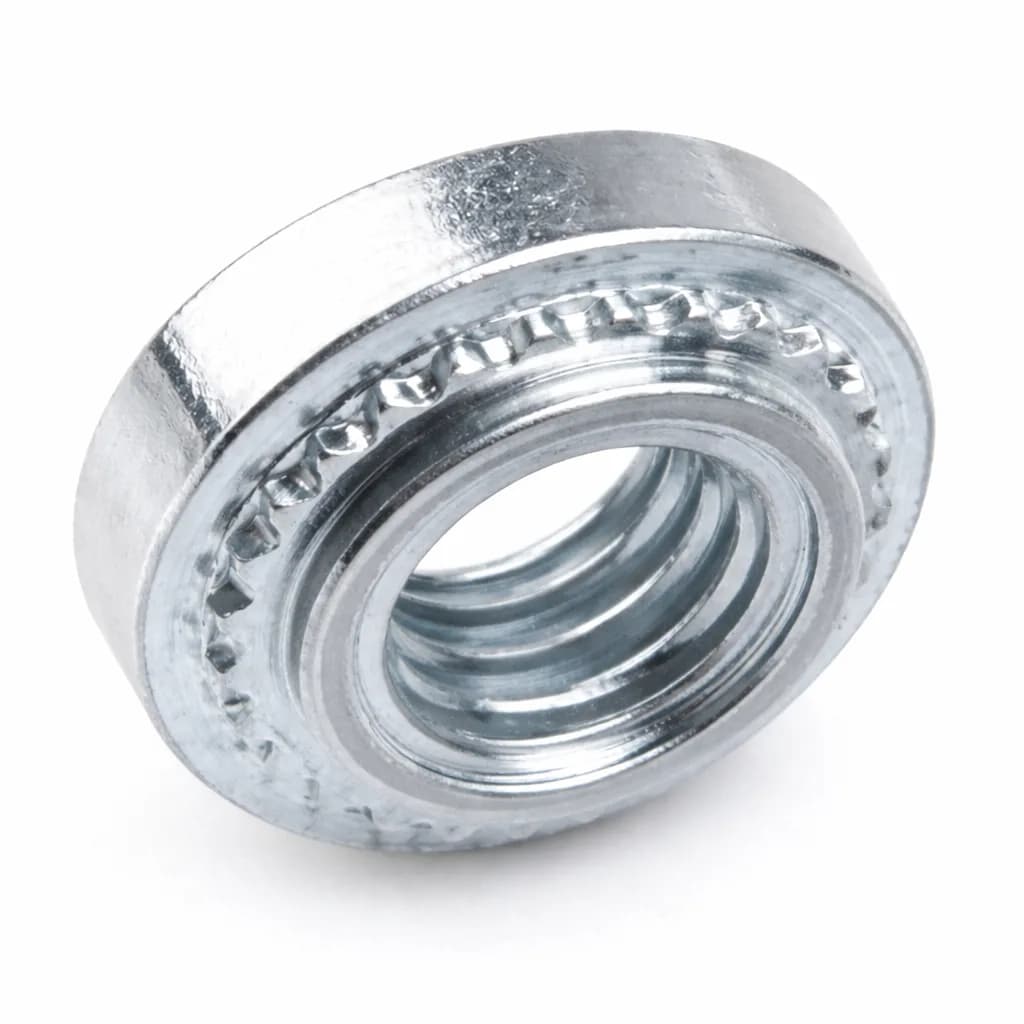
| S | 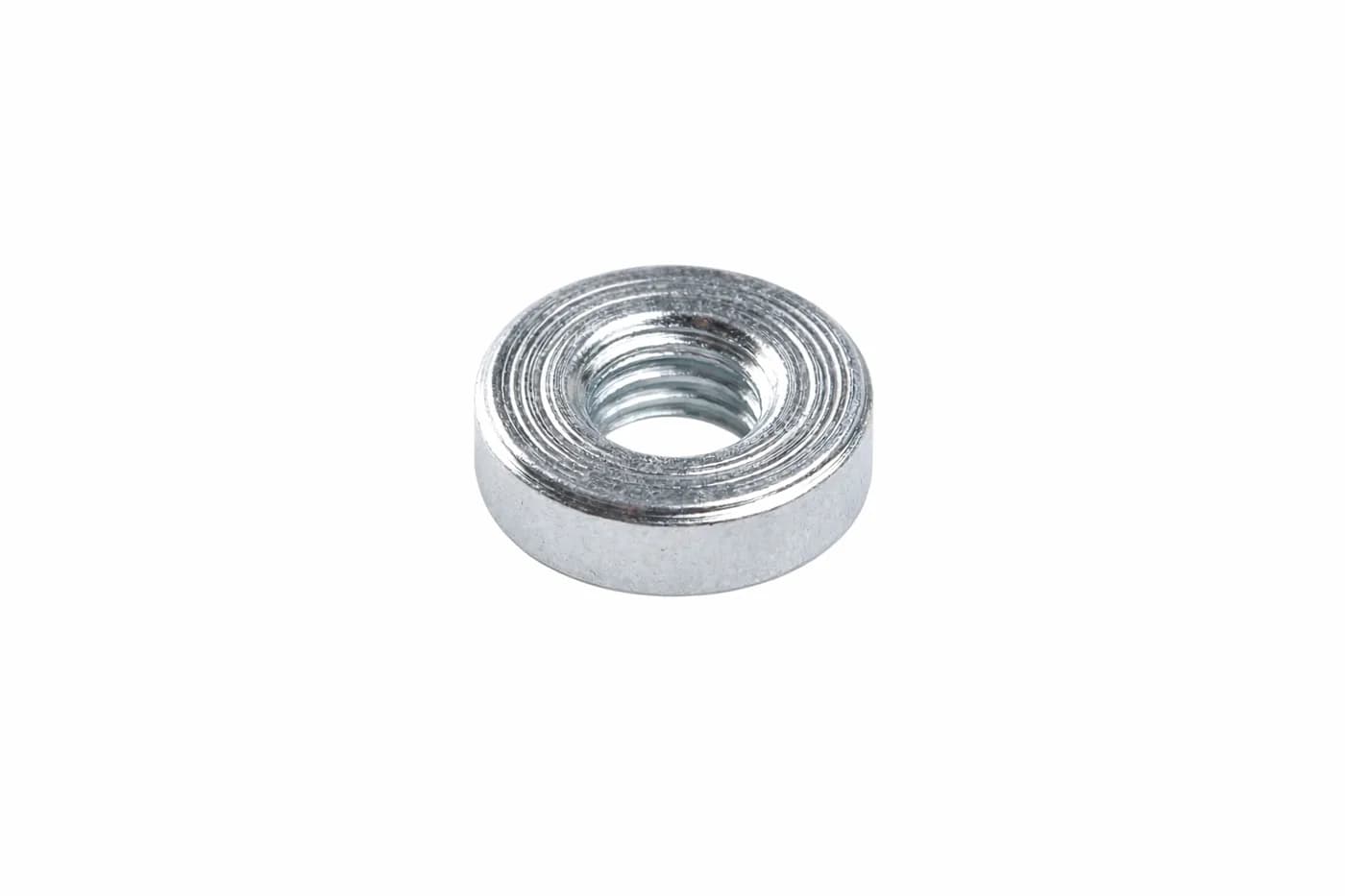 | Self-clinching nut | M3–M8 | 2.47–6.85 mm | Steel |
For detailed dimensional options and technical drawings, refer to the product pages or technical drawings.
Factors Affecting Reliability in Service
- Proper hole size
- Adequate sheet thickness
- Suitable sheet material
- Correct fastener selection
- Sufficient and controlled installation force
- Proper installation orientation and support surface
- Repeatable production conditions
Chapter 4
Basic Types of Self-Clinching Fasteners
SO, BSO, S, and FH series are configured for different installation requirements.
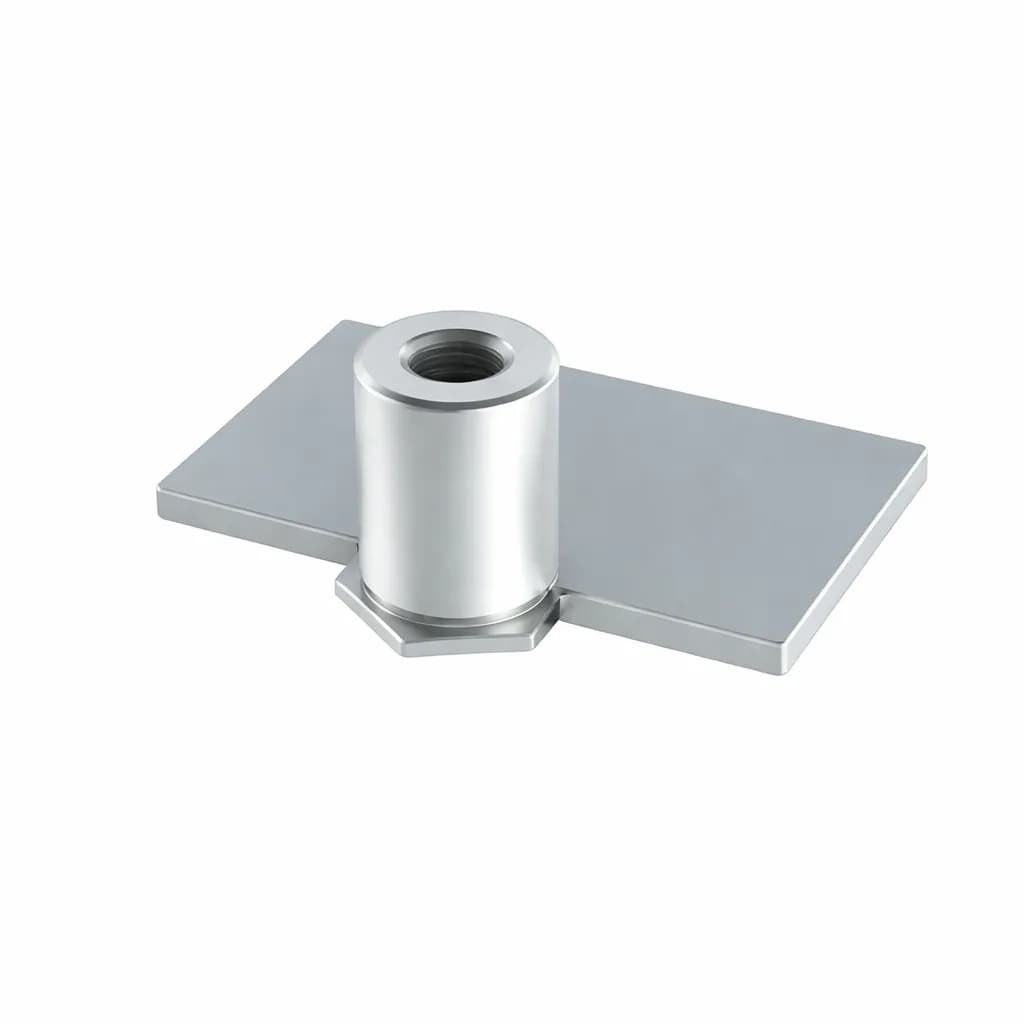
SO
An open-end threaded standoff that creates a raised mounting point in thin sheet metal parts.
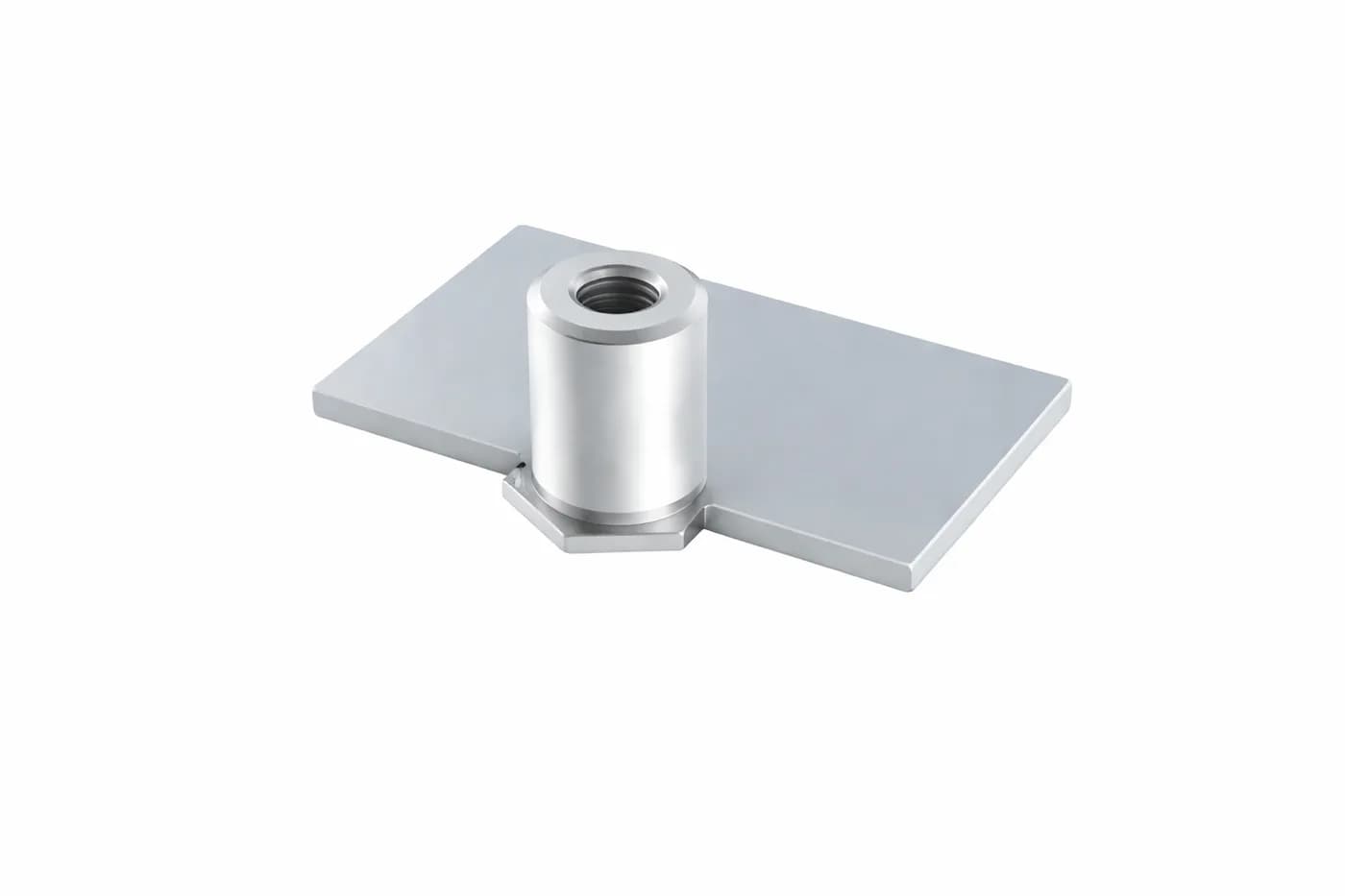
BSO
A closed-end threaded standoff suitable for more controlled mounting points and limited screw penetration.
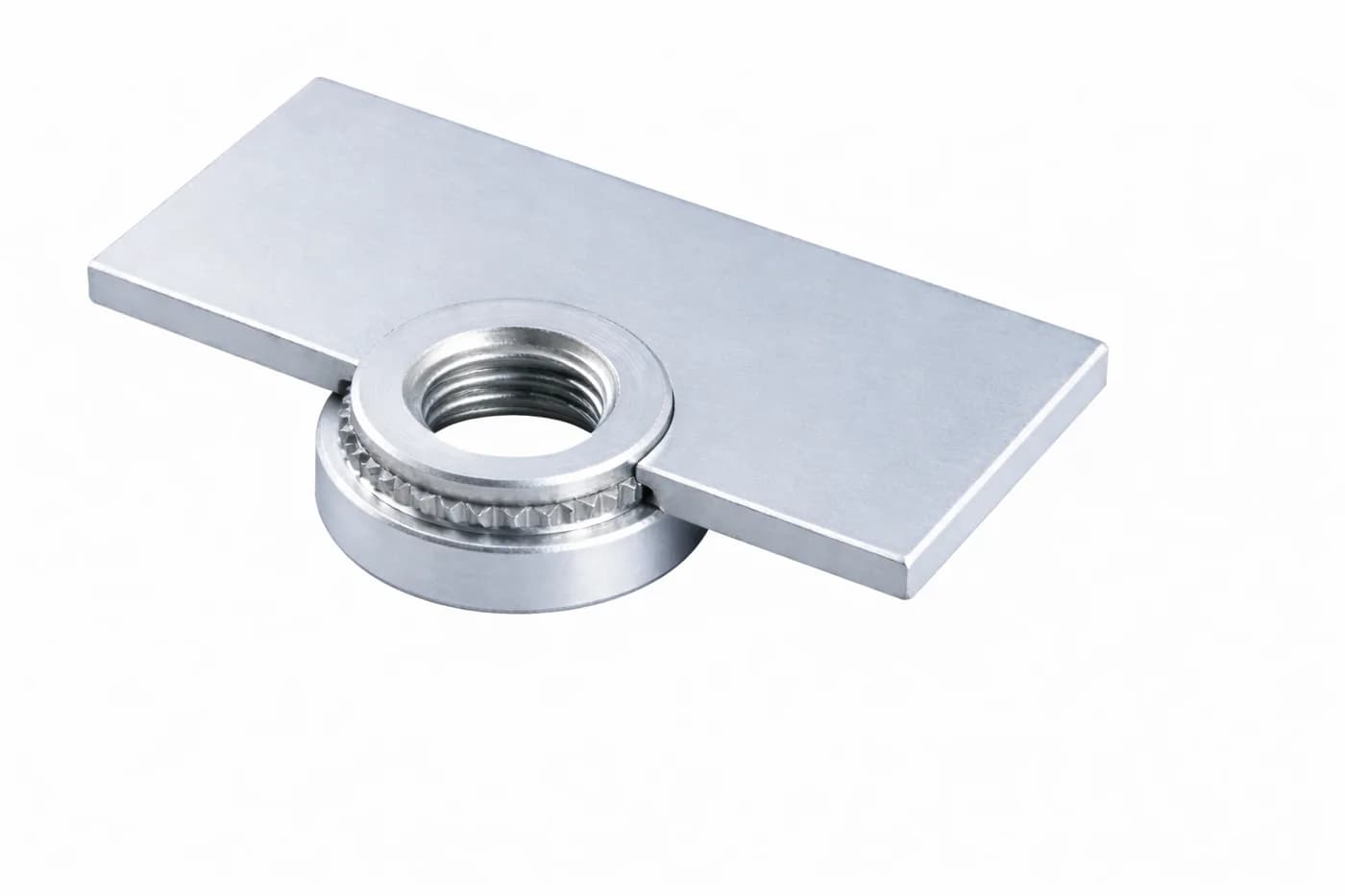
S
A self-clinching nut used to create strong internal threads in thin sheet metal.
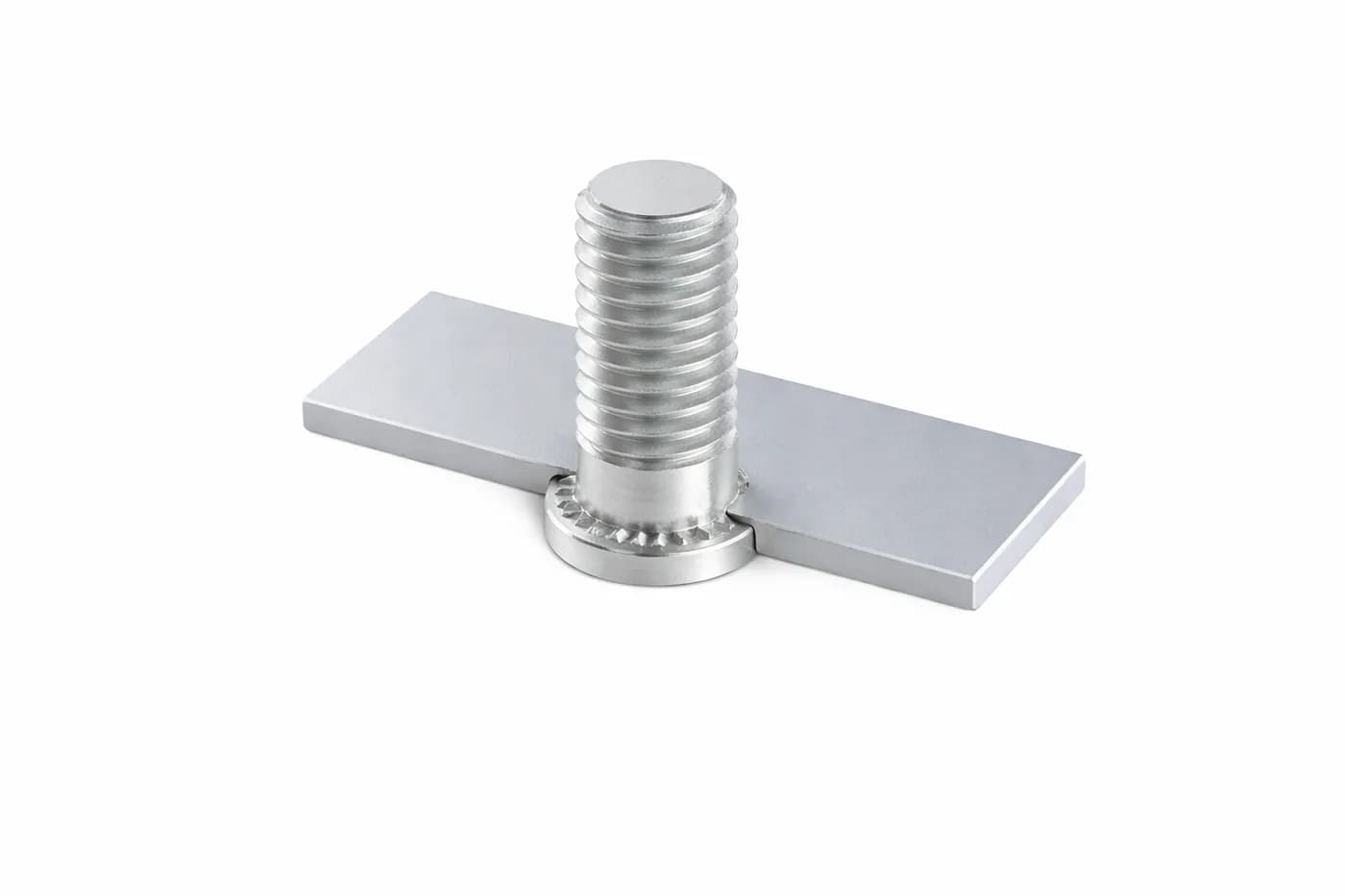
FH
A stud-type fastener permanently installed in the sheet with a press.
Chapter 5
Quality and Reliability of Self-Clinching Fasteners
Quality in self-clinching fasteners is determined by the combined evaluation of dimensional consistency, thread fit, material condition, surface finish, and installation performance. In thin sheet metal applications, reliable results depend on the compatibility between fastener geometry and application conditions.
Why Quality Matters
Correct dimensions, proper threads, and the right application method are critical to installation reliability and long service life.
Quality Criteria
Dimensional tolerances
Consistent dimensions are essential for repeatable installation. Hole fit, fastener geometry, and sheet contact areas should remain under control.
Thread fit
Accurate and clean threads are necessary for screw compatibility, assembly ease, and long service life.
Material compatibility
The fastener material and the host sheet properties should be evaluated together. Proper material selection directly affects installation performance.
Surface finish
Surface condition affects appearance, service life, and application quality. A clean and consistent finish supports a professional result.
Installation compatibility
Proper hole size, adequate sheet thickness, and sufficient squeezing force are basic requirements for reliable installation.
Performance verification
The selected fastener should be evaluated against the application requirements. Where necessary, fastener type and installation conditions should be validated for the specific application.
Quality control
Consistent manufacturing and inspection are essential to repeatable fastening performance.
Chapter 6
Installation Procedure
When self-clinching fasteners are installed with the correct hole size and controlled squeezing force, they provide reliable and repeatable results. A proper installation method supports mechanical locking in the sheet, strong attachment, and long service life.
Installation in 3 Steps
1
Place the fastener in the prepared hole
The fastener should be positioned in the correctly sized pre-punched hole and placed in the proper orientation. Compatibility between the fastener and the hole is the first and most critical requirement.
2
Apply controlled squeezing force between parallel surfaces
During installation, the upper and lower contact surfaces must remain parallel. The squeezing force should be sufficient to seat the fastener properly into the sheet.
3
Verify that the fastener is fully seated in the sheet
After installation, the head or bearing surface should be fully integrated with the sheet as intended by the design. Once installation is complete, the fastener should provide a fixed, square, and reliable mounting point.
Installation Dos
- Use the correct hole size.
- Apply sufficient and controlled squeezing force.
- Install the fastener in the correct orientation.
- Verify compatibility between sheet thickness and fastener type.
- Apply the installation force between parallel surfaces.
- Verify after installation that the fastener is fully seated.
Installation Don'ts
- Do not install with a hammer blow.
- Do not accept the installation as complete if the squeezing force is insufficient.
- Do not use an incorrect hole size.
- Do not over-squeeze the fastener or the sheet surface.
- Do not install between surfaces that are not parallel.
- Do not select a fastener without evaluating the application conditions.
Chapter 7
Installation Problems and Solutions
| Problem | Possible Cause | Solution |
|---|---|---|
| Poor retention / fastener not fully seated in sheet |
|
|
| Fastener falls out of the sheet or remains loose |
|
|
| Fastener installs crooked or off-center |
|
|
| Sheet surface deforms or the fastener is damaged |
|
|
| Insufficient performance after installation |
|
|
| Fastener not seated in sheet |
|
|
| Threads are tight or cracked |
|
|
| Fastener does not enter the hole |
|
|
| Fastener deforms or shears during installation | ||
| Sheet material flows into the installation tooling, causing the tooling to jam or crack | ||
| Edge bulging / sheet distortion near the edge |
|
|
Chapter 8
Common Design Challenges
Reliable performance of self-clinching fasteners depends not only on choosing the correct fastener, but also on proper location, adequate edge distance, correct hole size, and suitable sheet geometry. If these conditions are not considered during the design stage, installation quality and fastening performance can be affected adversely.
Centerline-to-Edge
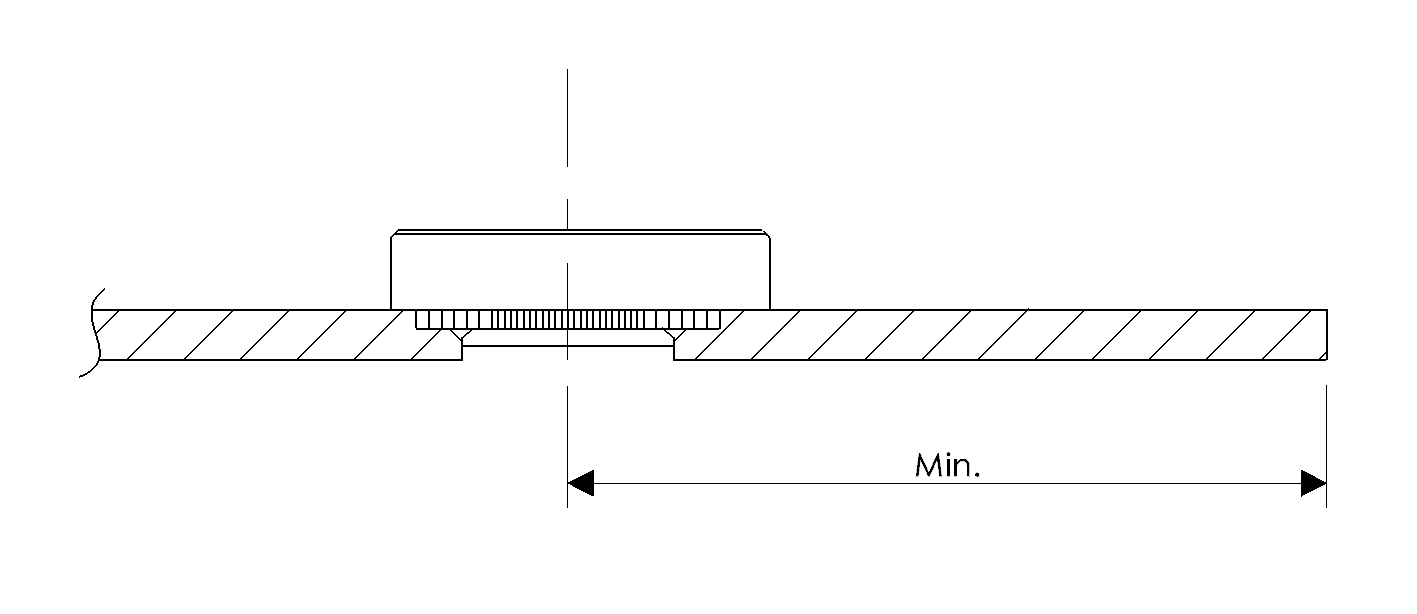
Centerline-to-edge is the minimum distance from the center of the mounting hole to the edge of the sheet. If a fastener is placed too close to the sheet edge, the edge may bulge, blow out, or provide inadequate retention. During design, not only the hole location but also the amount of sheet material available to support the clinch feature should be considered.
Recommendation: Avoid placing the fastener unnecessarily close to the edge of the sheet. Maintain an adequate centerline-to-edge distance in the design.
Multi-Sided Close-to-Edge Applications
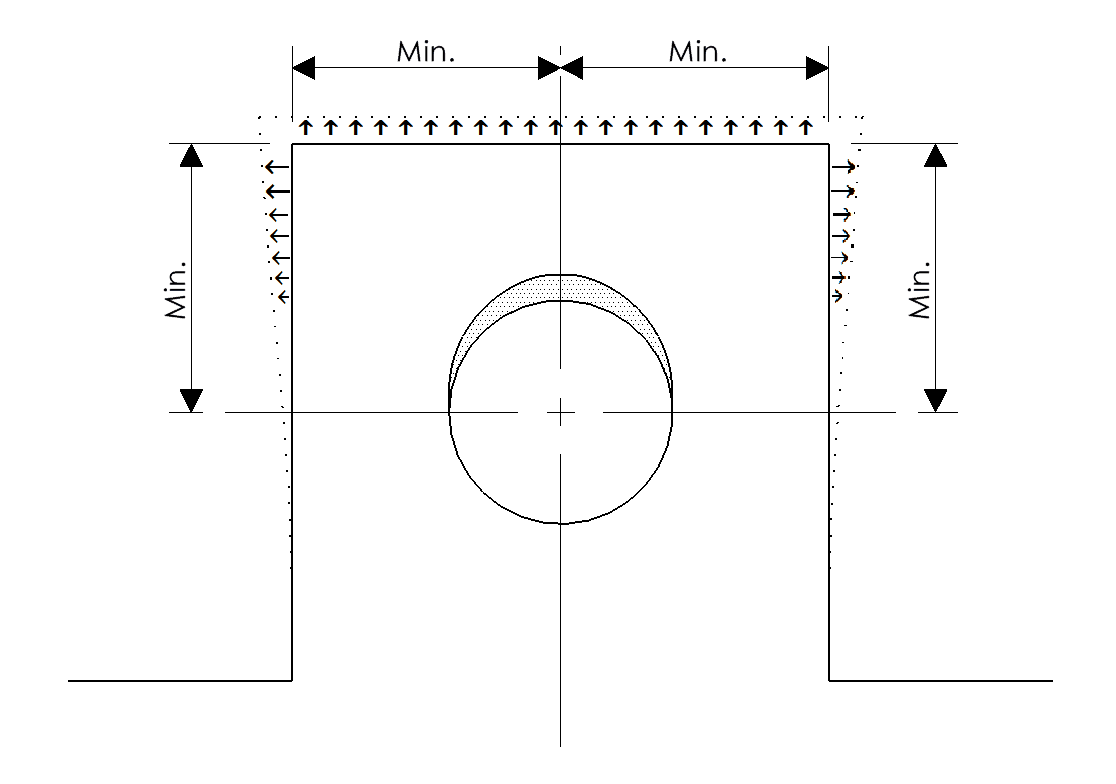
The published minimum centerline-to-edge values apply to one edge only. If the same minimum distance is applied on multiple sides at the same time and the edges are not supported during installation, noticeable sheet distortion can occur. This distortion reduces the amount of panel material captured in the undercut and can significantly reduce clinch performance.
Recommendation: If the mounting hole is close to more than one edge, do not evaluate the application solely according to the minimum distance value. Sheet geometry, edge support, and the amount of remaining material around the clinch area should be reviewed together.
Proximity to a Bend
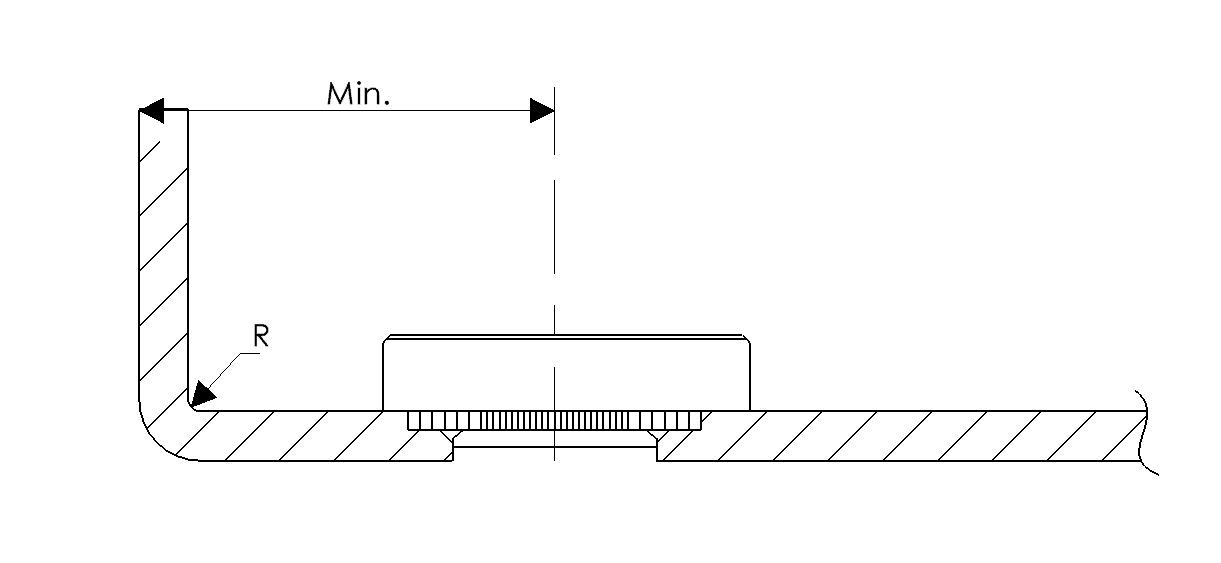
When a fastener is installed near a bend, the minimum distance should be measured from the center of the mounting hole to the outside of the bend radius, not to the straight edge. Installation issues in this area may differ from ordinary centerline-to-edge conditions. In addition, the sheet surface in the installation area should remain sufficiently flat to support installation quality and retention performance.
Recommendation: For applications near a bend, evaluate the hole location together with the bend geometry. If necessary, move the fastening point away from the bend area and leave a sufficiently flat installation surface.
Spacing of Multiple Fasteners
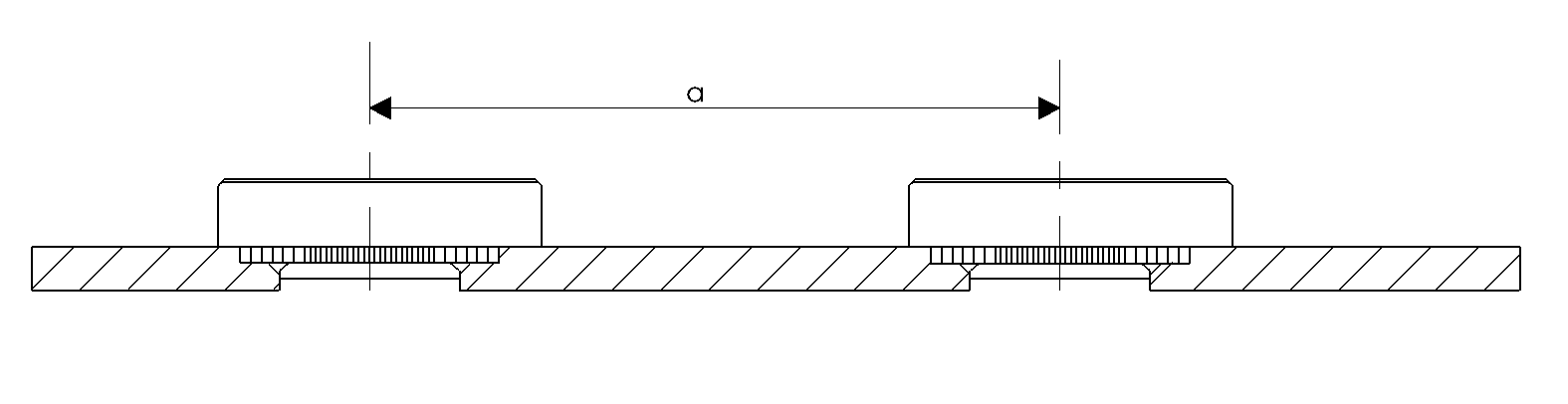
If multiple fasteners are located too close to each other, the mounting holes may interfere with one another and cause sheet distortion. In thin sheet metal applications, this can lead to visible bulging or oil canning. When evaluating the distance between two or more fasteners, consider not only the centerline distance but also the amount of remaining sheet material between the mounting points.
Recommendation: If multiple fasteners are used, leave adequate spacing between them. During layout planning, evaluate sheet thickness, hole size, and the amount of material remaining between the fastening points together.
Chapter 9
Frequently Asked Questions About Self-Clinching Fasteners
Does a self-clinching fastener change shape during installation?
No. When the correct hole size and suitable pressing conditions are provided, the fastener becomes mechanically locked in the sheet. Reliable installation depends on evaluating both the correct fastener and the correct application together.
How is the fastener retained in the sheet?
During installation, the fastener locks mechanically into the sheet material. This structure secures the fastener and creates a reliable mounting point.
Is special equipment required for installation?
No special equipment is strictly required; a press that provides the necessary parallel squeezing force is sufficient.
Which fastener type should I choose?
The fastener type should be selected according to the application structure, sheet thickness, installation direction, and required fastening function. Through-threaded standoffs, blind standoffs, self-clinching nuts, and self-clinching studs serve different use cases.
Which factors affect fastening performance the most?
Hole size, sheet thickness, fastener geometry, installation direction, and applied squeezing force directly affect performance. These factors should be evaluated together before installation.
Why is sheet thickness important?
Sheet thickness is important for proper seating and reliable fastening performance. When selecting a fastener, the sheet condition and application requirements should be evaluated together.