IN-203
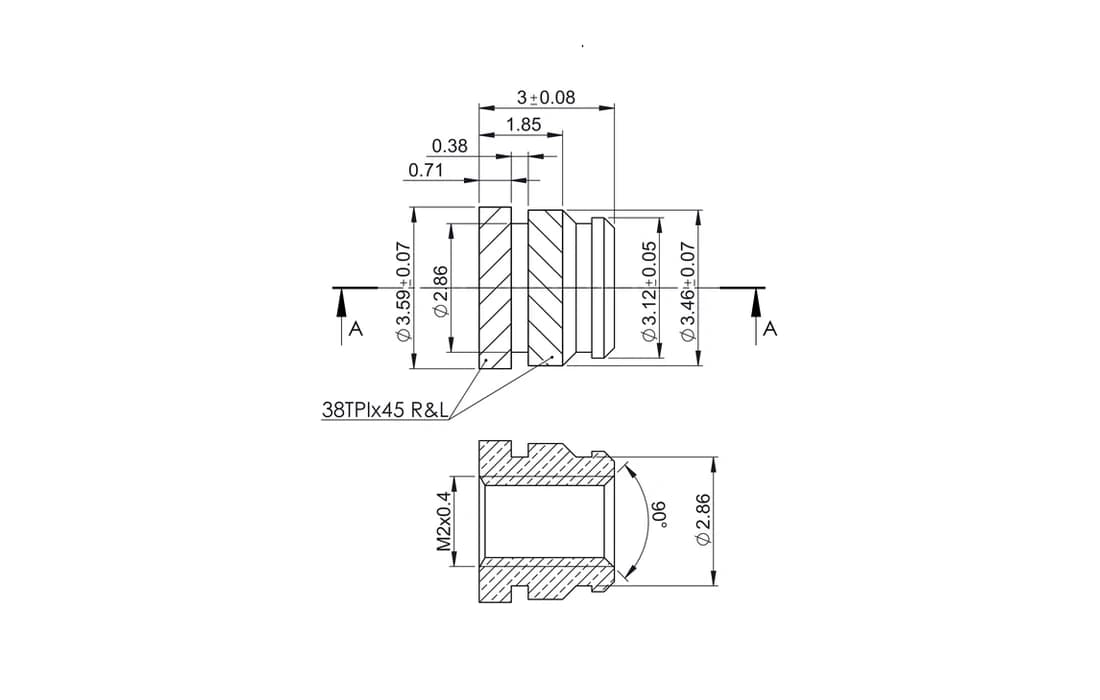
12 products found
0.14×0.14×0.12 in
To see prices
0.18×0.18×0.16 in
To see prices
0.18×0.18×0.23 in
To see prices
0.25×0.25×0.16 in
To see prices
0.25×0.25×0.32 in
To see prices
0.28×0.28×0.23 in
To see prices
0.34×0.34×0.27 in
To see prices
0.28×0.28×0.37 in
To see prices
0.24×0.24×0.33 in
To see prices
0.17×0.17×0.19 in
To see prices
0.23×0.23×0.31 in
To see prices
Screws and Nuts
Brass insert selection guide
Compare the dimensions in the product table with your plastic boss. The table combines current product codes, technical dimensions, and the category drawing when available.
Internal thread range
Values to verify in the design
Verify the product drawing and test an installation in the actual plastic part before series production.
IN-203
IN-347
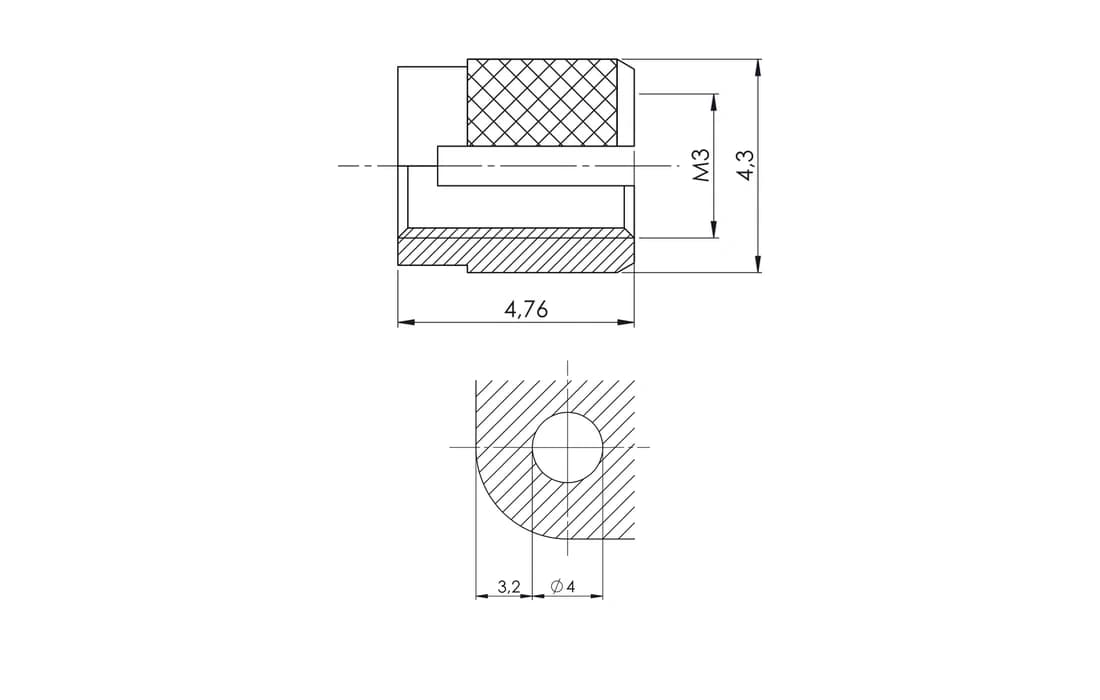
Match the size to the screw standard used in your assembly.
Compare the insert diameter with the mounting hole and plastic wall thickness.
Check the insert length against the boss height and blind-hole clearance.
Choose a body designed for molding, press fitting, heat setting, or expansion.
Choose the right product, from thread to installation
The plastic material, hole geometry, and production sequence determine which insert type is suitable.
Place the insert in the mold before injection. Its position and the plastic flow must match the product drawing.
IN-203, IN-254, IN-506
Install the insert in a prepared plastic hole after molding. Verify the hole diameter and application temperature for the material.
IN-347, IN-479
For torsion and pull-out loads, evaluate the body form, hole geometry, and installation force together.
IN-483
Technical selection notes
This category covers brass inserts used to create a metal internal thread in plastic bodies. Compare product codes by checking the internal thread, outside diameter, length, mounting hole, and body form together. The upper section provides quick selection parameters; this section covers the technical details to verify in the part design.
A brass insert is a fastener used to create a metal internal thread in a plastic part. It makes the screw engage with the metal thread in the insert instead of the plastic itself. This structure maintains dimensional stability at covers, panels, and service points that are opened and closed repeatedly.
Screws removed and installed repeatedly at covers, panels, or PCB supports can wear the plastic thread over time. An insert creates a more controlled and repeatable threaded connection at these points. Evaluate the boss diameter, wall thickness, and clearance around the screw axis together in the part design.
Select the internal thread to match the screw standard. M2 and M2.5 suit small electronic assemblies, M3 and M4 suit general body connections, and M5 and M6 suit points that require higher clamping force. Inserts with the same thread can have different outside diameters and lengths, so do not select by internal thread alone.
Check the insert outside diameter, length, and mounting hole against the plastic boss geometry. A narrow hole can crack the plastic, a wide hole can reduce retention, and insufficient depth can prevent full thread engagement. For blind holes, also check the distance between the insert and the bottom of the hole.
Standard inserts provide a basic metal thread surface. Expansion types create a different locking action inside the plastic hole during installation. A hex body provides geometric support against rotation where the hole design allows it.
Before selecting a product code, evaluate the internal thread, outside diameter, insert length, mounting hole, blind-hole depth, plastic material, connection load, and service frequency together.
Brass insert selection guide
Check the screw, hole, and installation conditions together before completing your selection.
A brass insert creates a metal internal thread in a plastic body. It reduces wear in screw joints that are opened and closed frequently.
Plastic threads can wear during repeated assembly and service. An insert provides a reusable metal thread for covers, panels, and PCB mounting points.
Match the metric size of the screw to the insert's internal thread. Also check the outside diameter, length, and mounting hole before choosing.
Expansion inserts suit post-molding installation or holes that require a different locking action. Verify the hole geometry and installation force in the product drawing.
A narrow hole can crack the plastic, while a wide hole can reduce retention. Use the hole size and tolerance shown in the product drawing.
An insert-molded part bonds to the plastic during injection. Press-fit, heat-set, or expansion inserts are installed in a prepared hole after production.
Check the screw, hole, and installation conditions together before completing your selection.
Inserts are fasteners used to create screw mounting points in electronic device boxes produced by injection molding method. Placed inside the plastic body, they prevent thread wear during unscrewing-inserting operations and provide a long-lasting connection.
Inserts in this category include types suitable for insertion into the mold, as well as general purpose models that can be used in out-of-mold assemblies. With options suitable for different screw diameters and mounting methods, they offer controlled and repeatable assembly in electronic box applications.